
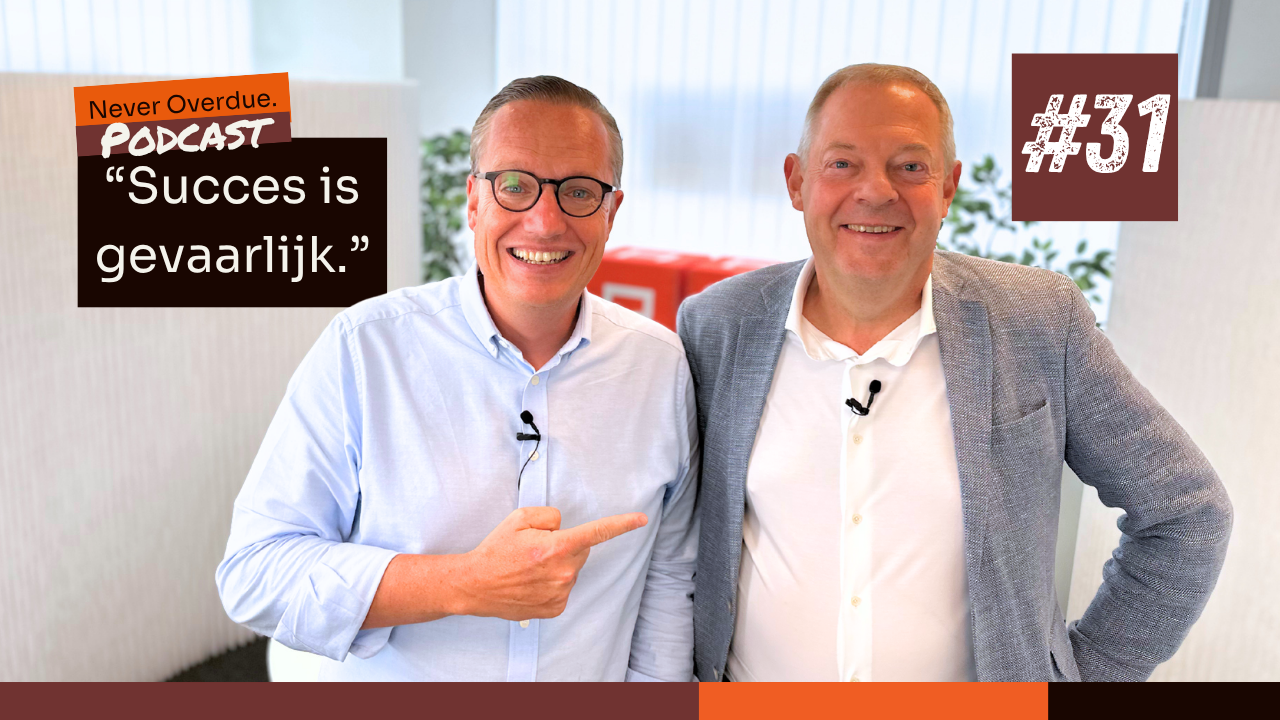
Peter Verschelden of Moore on AI, growth, and the future of accountancy
How do you build an organization that continues to grow without losing its entrepreneurial spirit?
In this episode of the Never Overdue Podcast, Jean-Paul Van Damme speaks with Peter Verschelden, an accountant and statutory auditor by training and one of the driving forces behind Moore Belgium.
Verschelden joined his father’s accounting firm in 1995, which had eight employees at the time. Today, Moore in Belgium has approximately 2,300 employees. This growth was achieved by broadening accountancy to include audit, tax & legal, corporate finance, consulting, analytics, and AI.
The conversation covers five major questions: what AI means for accountancy, how to bring people along in change, how to maintain culture during growth, why you want to grow, and why success itself can become a threat?
Watch the episode: https://youtu.be/YFSHBlcG8UM
Will AI replace accountants?
According to Peter Verschelden, AI will primarily change workflows rather than replace the entire profession.
Today, much of the time in accountancy is spent on processing, administration, and the preparation of annual accounts. AI and automation can significantly reduce this, giving accountants more time for analysis, advice, and client support.
According to Verschelden, the accountant of the future does not need less expertise, but must apply that expertise in a different way. Technology takes over repetitive work, while human interpretation, trust, and advice become more important.
How do you get employees on board with the AI transformation?
Implementing technology is one thing. Bringing people along in the change is the real challenge.
Moore therefore focuses heavily on communication, training, and change management. For Verschelden, leadership must go beyond explaining what is changing: leaders must also model the new behavior themselves.
Jobs will also change. Employees who primarily process data today may be much more involved in checking, interpreting, and applying that information tomorrow.
How do you maintain corporate culture during rapid growth?
For Peter Verschelden, culture starts with the people you attract.
Moore grew from eight to approximately 2,300 employees. Nevertheless, the organization wants to maintain its entrepreneurial character. Verschelden summarizes the desired culture as “up”: moving forward, growing, and being ready for change.
He uses a striking metaphor for this: Moore is not a tanker where everyone follows the same course, but a fleet of entrepreneurial partners who maintain their own responsibility within a common framework.

Why does Moore grow if growth is not an end in itself?
For Verschelden, growth is not about getting bigger, but about being better at doing business.
Growth gives Moore the opportunity to offer clients more expertise, give employees new opportunities, and support entrepreneurs more broadly. Therefore, Moore does not necessarily want to become the largest, but above all to excel in what it does.
The international expansion also fits within this philosophy. Moore wants to grow further in Europe, but for Verschelden, an acquisition is only successful when the right partner is found and the integration succeeds.
Why can success be the greatest threat to a company?
Because success can cause an organization to stop changing.
Verschelden refers to Jim Collins’ idea that “good” can sometimes be dangerous: good results can lull an organization to sleep. Meanwhile, new technologies, competitors, or changing client expectations can completely transform the market.
Frequently Asked Questions
Peter Verschelden is an accountant and statutory auditor by training and one of the driving forces behind Moore Belgium. He joined his father’s accounting firm in 1995, which had eight employees at the time.
Moore is a professional service provider that supports companies with accountancy, audit, tax & legal, corporate finance, consulting, analytics, and AI.
According to Peter Verschelden, AI will primarily change certain workflows and tasks. Routine processing can be further automated, while advice, analysis, expertise, and client relationships remain important.
According to Verschelden, this starts with attracting the right people and maintaining a clear culture. At Moore, that culture stands for progress, entrepreneurship, quality, and ethics.
Success can make companies complacent. When results are good, there is a risk that organizations respond less quickly to new technology, competition, or changing customer needs.

For Moore today, this means, among other things, that AI cannot be ignored. If technology changes a large part of the current business model, you must already be thinking about the services and expertise that will create value tomorrow.
The conversation with Peter Verschelden is ultimately about one major challenge: how do you stay relevant when you are successful?
For Moore, this means continuing to invest in people, technology, and expertise. Growing without seeing growth as a goal. Maintaining entrepreneurship within a larger organization. And above all: never assuming that what works today will still work tomorrow.
Because perhaps that is the most important lesson from this episode: success is not an end point. It is the moment when you must start changing again.


