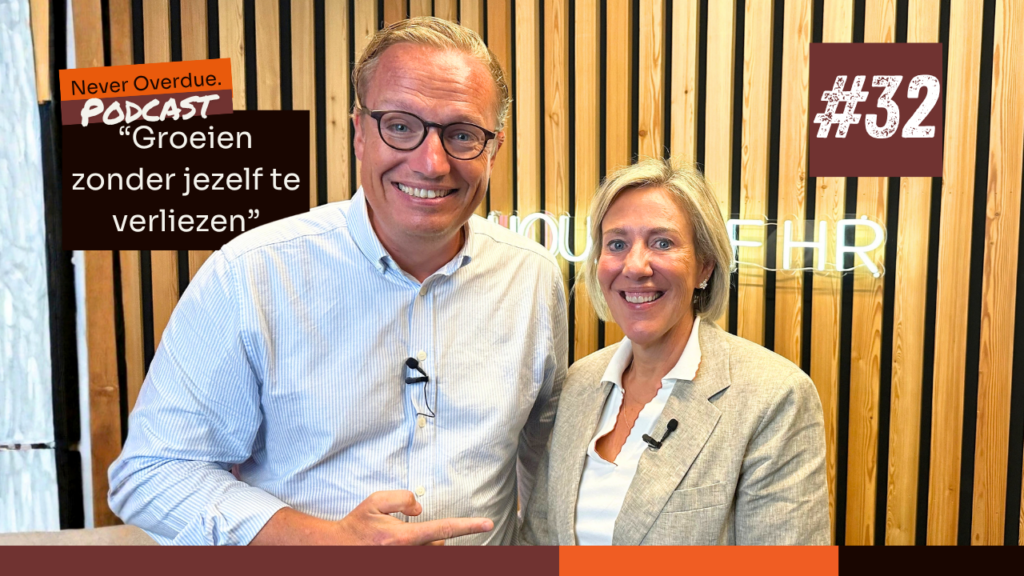

Peppol, Invoices & Digital Revolution: Jan Eeckhout (Speos) in the Never Overdue Podcast
In this new episode:
What exactly is Peppol? Will it be a solution for invoice chaos or will it create new challenges? In this episode of the Never Overdue Podcast, Simon Meurs speaks with Jan Eeckhout, e-invoicing expert at Speos Belgium. An episode packed with insights on digital invoicing, compliance, and the future of e-reporting in Belgium and Europe. Not to be missed for finance professionals and entrepreneurs who want to be prepared for 2026 and beyond!
Why you shouldn’t miss this podcast
Peppol: from European initiative to Belgian spearhead
Peppol stands for Pan-European Public Procurement Online and was established in 2008 as an initiative of the European Union to promote competition between companies and make tenders more transparent. It has grown into a network for the secure exchange of e-invoices and other documents.
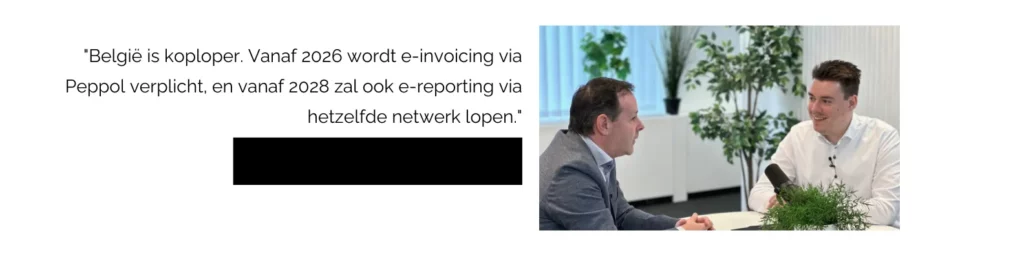
Belgium is taking a grand approach: not just for public contracts, but for all B2B invoicing. According to Jan, this will lead to enormous efficiency gains, although he acknowledges that not everyone will be ready immediately on January 1, 2026. Companies will need to pivot, both technologically and organizationally, to be compliant in time.
Efficiency, but also new challenges
Peppol promises many benefits: faster invoicing, automatic delivery receipts, and fewer errors thanks to fixed UBL formats. However, there are also pitfalls to digitalization.

An important point is that Peppol is pure transport infrastructure. From 2026, the government will not yet be monitoring your invoices. But with e-reporting starting in 2028, that will change: the tax authorities will then be able to perform analyses and audits faster based on digital data. Positive, says Jan, because it can also make support measures more targeted and combat fraud. At the same time, it raises questions about privacy and administrative burden.
Practical implications for businesses
Companies will have to adapt their processes. No more Excel invoices: everything must be delivered in a structured UBL file. Small businesses can use tools or rely on their accountant. Those who invoice internationally must also pay attention: not all countries work with Peppol; some have their own platforms. Belgium, however, is a frontrunner and aims to have all cross-border invoices handled digitally by 2030.
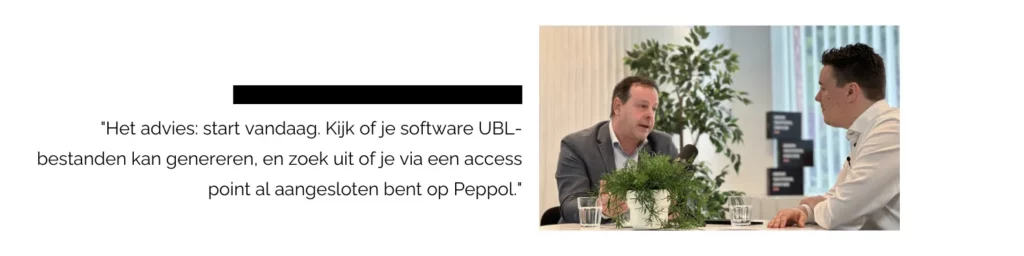
Additionally, Jan warns that duplication checks—for example, with reminders or double transmissions—are not standard in Peppol. Companies must therefore organize this themselves within their systems to avoid errors or double payments. Nevertheless, he expects enormous efficiency gains, also because Peppol allows for feedback messages, such as confirmations of receipt, approval, or payment.
About our guest:
Jan Eeckhout is an e-invoicing expert at Speos Belgium and supports key account managers in developing solutions for digital invoicing and document flows. He closely follows the evolution of Peppol and e-reporting and has a sharp insight into how companies can best prepare for this digital revolution.
Why listen to this episode?
Peppol is not a hype, but a solid step toward more efficient and transparent business processes. For companies, it means investing in technology, but also in knowledge and process adaptation. Jan Eeckhout’s message is clear: those who start now will build a competitive advantage later.