Peter De Keyzer on entrepreneurship in uncertain times
How do you make sound decisions when the future is uncertain? How vital is cash flow for growth? And why, according to Peter De Keyzer, is optimism not a naive attitude, but a conscious choice?
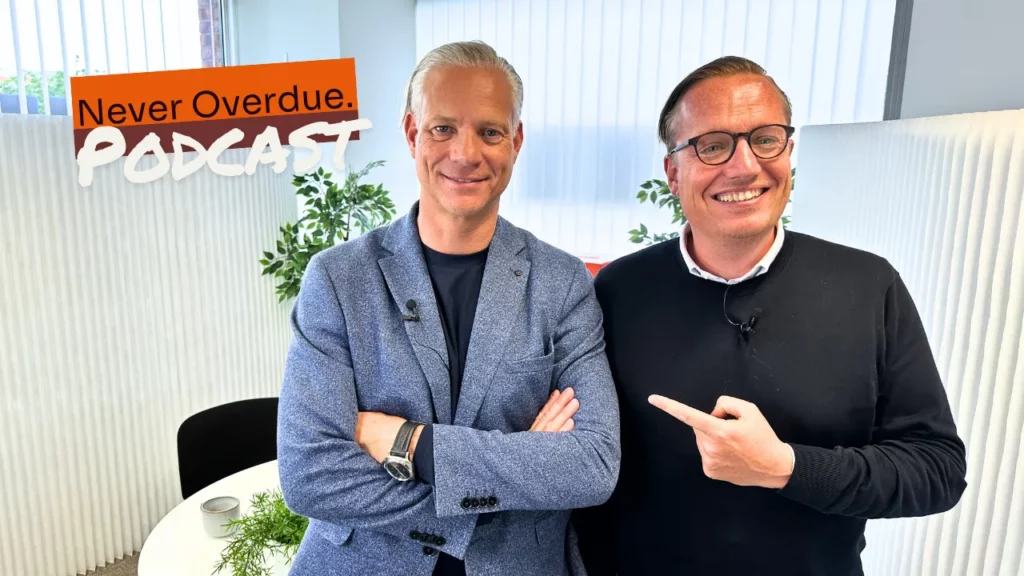
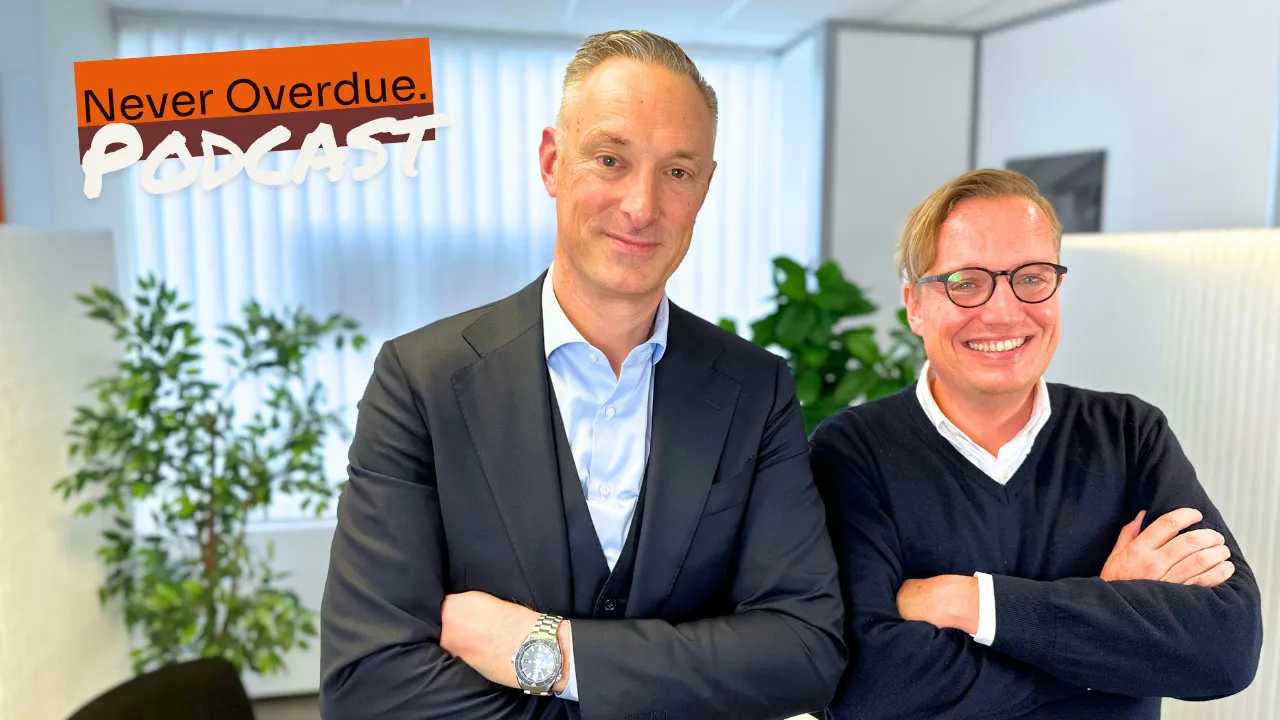
In this episode of the Never Overdue Podcast, Jean-Paul Van Damme (AAA) talks with Peter De Keyzer, economist, entrepreneur, author, and founder of strategic communications agency Growth Inc.
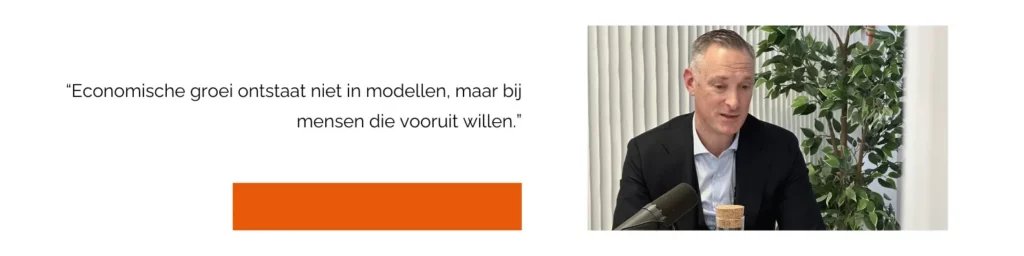
The conversation touches on economics, but focuses primarily on entrepreneurship, cash flow, decision-making, and resilience. While economic models can explain what is happening, it is ultimately people who decide to invest, take risks, and build a business.
What can entrepreneurs learn from an economist who became an entrepreneur himself?
Peter De Keyzer made the transition from chief economist to entrepreneur himself. Not because he wanted to leave his economic expertise behind, but because he wanted to increase its impact in practice.
According to De Keyzer, economic models primarily explain what is happening. Entrepreneurs then determine what to do with that information. Growth occurs when people make decisions, dare to take risks, and take responsibility, even when they do not have all the information.
This makes entrepreneurship fundamentally different from forecasting, according to De Keyzer. You don’t need to know exactly what the future holds to make a decision today.
Why is cash flow so important for growth?
A company can grow in revenue and still come under financial pressure. According to Peter De Keyzer, it is therefore important not to confuse revenue with financial health.
Particularly when clients use long payment terms, growth can require additional working capital. Invoices must be followed up, and entrepreneurs must pay sufficient attention to when money actually comes in.
Cash is therefore not a detail of financial administration, but a strategic factor in growth. Requesting advances, strictly monitoring invoicing, and maintaining sufficient liquidity can prevent successful growth from becoming a financial risk itself.
For entrepreneurs, this means that revenue, profit, and cash flow are different things, and each deserves its own attention.

How do you make decisions when the economy is uncertain?
Inflation, energy prices, geopolitical developments, and technological changes make the economic environment more complex. But according to De Keyzer, these uncertainties should not become a reason to postpone decisions indefinitely.
Entrepreneurs who wait until all information is available may eventually be unable to decide at all. In practice, it is about combining sufficient relevant figures with experience, intuition, and the willingness to adjust course.
Uncertainty does not mean you cannot decide. It means you must be prepared to adapt your decision when new information becomes available.
Why is optimism important for entrepreneurs?
One of the central ideas in the conversation is that optimism can be a choice. According to De Keyzer, people tend to strongly emphasize negative developments and make positive progress less visible.
Entrepreneurship requires a different reflex. Anyone starting a business or investing in growth assumes there are opportunities, even when circumstances are not perfect.
Optimism does not mean ignoring problems. It means assuming that problems can be addressed and that progress remains possible.

Why are economic models insufficient to explain growth?
Economic models can help understand developments, but they do not fully explain why people make certain choices.
According to Peter De Keyzer, economic progress is ultimately driven by people who take initiative, invest, undertake, and accept risks.
This makes entrepreneurship a key driver of economic growth. Economic conditions alone do not determine what happens; the decisions of individual entrepreneurs and companies also play a role.
What can entrepreneurs take away from the conversation with Peter De Keyzer?
The most important lessons are remarkably practical. Understand your economic environment, but do not wait for certainty. Guard your cash flow as you grow. And keep looking for opportunities, even when circumstances are uncertain.
For entrepreneurs and business leaders, this means that resilience is not just about avoiding risks. It is also about the ability to make decisions, bear responsibility, and adjust when reality changes.
In this context, optimism is not blind faith in the future. It is the conviction that you can influence what happens tomorrow.

Conclusion: optimism is an entrepreneurial choice
The conversation with Peter De Keyzer shows that doing business in uncertain times does not mean waiting until the future becomes predictable.
Economic models can provide direction. Figures can make risks visible. But ultimately, entrepreneurs must decide.
Financial discipline is essential in this regard. Growth requires not only revenue and customers, but also enough cash to finance that growth.
The common thread is therefore simple: understand the uncertainty, guard your cash, dare to decide, and keep believing that progress is possible.
Because in Peter De Keyzer’s view, optimism is not naivety. It is a choice to look not only at what can go wrong, but also at what you can achieve yourself.
Frequently asked questions about Peter De Keyzer and entrepreneurship in uncertain times
Peter De Keyzer is an economist, entrepreneur, author, and founder of strategic communications agency Growth Inc. He was previously active as a chief economist and speaks in the Never Overdue Podcast about economics, entrepreneurship, and growth.
Cash flow determines when money is actually available within a business. A company can grow in revenue and still experience financial pressure when customers pay late or when growth requires a lot of working capital.
Entrepreneurs can combine relevant figures and economic information with experience and intuition. It is important not to wait for complete certainty and to be prepared to adjust decisions when new information becomes available.
Optimism does not mean that problems are ignored. It means assuming that challenges can be addressed and that there are opportunities to make progress, even when circumstances are uncertain.
Economic models can help explain economic developments, but entrepreneurs and companies make their own choices regarding investments, risks, and growth. Human initiative and entrepreneurship therefore play an equally important role.