What happens when you, as an entrepreneur, spot opportunities in a sector under pressure? For Mieke Neven, the answer is clear: dare to take the leap, keep moving, and above all, know where your own strengths lie.
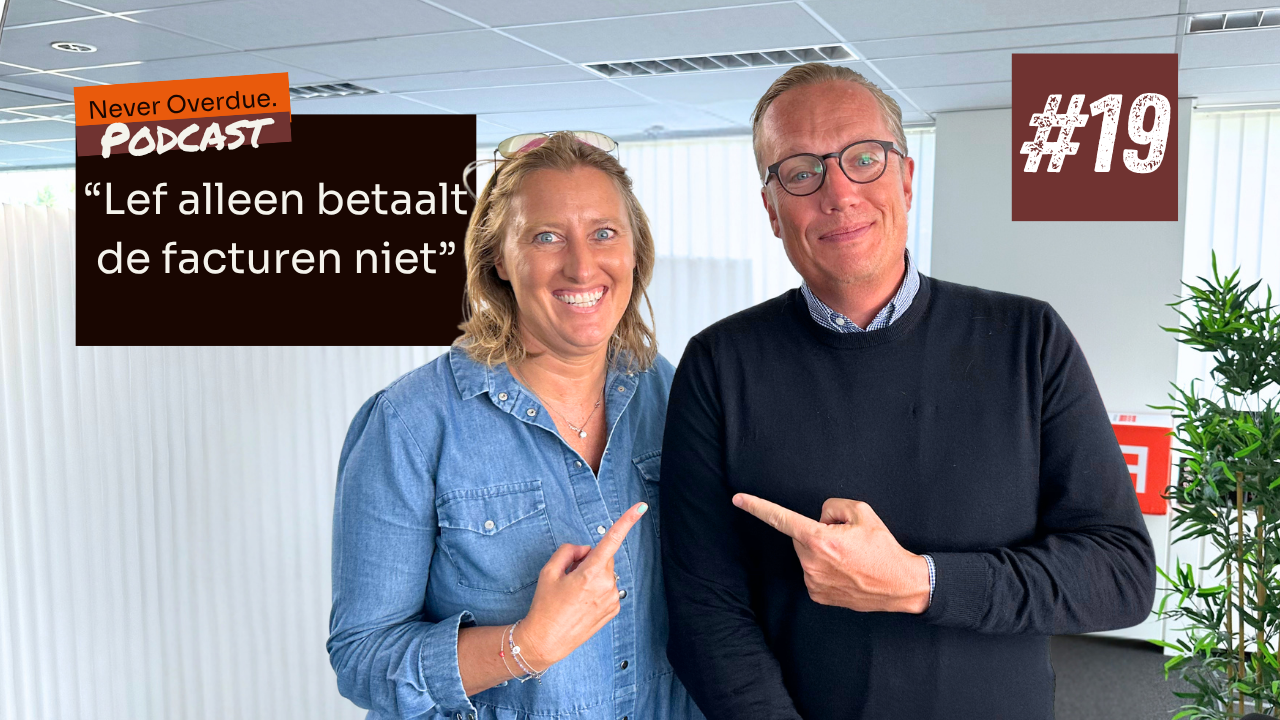
In episode 19 of the Never Overdue Podcast, Jean-Paul Van Damme speaks with Mieke Neven, CEO of Burocad and co-founder of Connec. Drawing on her Limburg roots, she continued to build a company in a challenging market. The conversation covers entrepreneurship, creativity, difficult moments, and the often underestimated role of cash flow.
Because while creativity may be the engine, without financial breathing room, even the best company won’t get far.
How a client suddenly becomes an entrepreneur
Mieke Neven did not begin her story at Burocad as an entrepreneur, but as a client. When the opportunity arose to take over the company, she primarily saw a chance to grow.
The market in which Burocad operated did not make that decision an obvious one. Nevertheless, Mieke chose to take the plunge and further develop the business.
Her story illustrates that entrepreneurship does not always start with a carefully mapped-out plan. Sometimes it begins with recognizing an opportunity and the willingness to go for it.
Where others see mainly risk, an entrepreneur can also see possibilities.
Why an entrepreneur must dare to re-evaluate their own role
Entrepreneurship does not necessarily mean you have to keep doing everything yourself.
Mieke discovered that while she is a born entrepreneur, she is not necessarily the classic manager who draws energy from daily operational leadership. Therefore, she chose to hand over the day-to-day management of Burocad and focus more on her own strengths: creativity and commerce.
This is a significant entrepreneurial choice. A company grows not only through better processes or more employees, but also when the entrepreneur dares to look at themselves critically.
Which tasks provide energy? Where is your added value? And where might someone else be better suited?
You don’t have to be the best at everything your company needs. You primarily need to know where you make the difference.

Why creativity needs cash flow
At first glance, creativity and cash flow seem like two completely different worlds. For Mieke, they are actually closely linked.
New ideas, commercial opportunities, and creative projects need space. That space only emerges when the financial foundation of a company is sufficiently healthy.
In the podcast, Mieke also honestly admits that cash flow management was not always at the top of her priority list. Through experience, she learned how vital financial buffers are, especially when a company operates in a market where conditions can change rapidly.
Cash flow is therefore more than just a financial dashboard. it helps determine how much freedom an entrepreneur has to seize opportunities.
A healthy cash flow gives creativity breathing room.
Continuing to do business when the market is down
Entrepreneurship in a challenging market requires more than just optimism. It also requires the willingness to make choices and to adapt.
Mieke’s trajectory at Burocad shows how important it is not to stand still when circumstances change. A difficult market does not automatically mean that growth opportunities no longer exist.
Her optimistic attitude plays an important role in this. Not as blind faith that everything will work out on its own, but as a way to keep looking for possibilities.
Ultimately, resilience does not mean you never face setbacks. It means that after a difficult period, you look again at what is possible.

What entrepreneurs can learn from creativity
Creativity is not only relevant for companies that design, produce, or communicate. It is also a way of thinking.
A creative entrepreneur looks at a problem and searches for a different possibility. This can lead to a new product, a different commercial approach, or even a completely new role for the entrepreneur themselves.
In Mieke’s case, that creativity comes together with commercial insight. It is not just about having ideas, but also about recognizing opportunities and actually turning them into action.
In doing so, financial reality remains important. A good idea must ultimately be able to work within the economic model of a company.
Dreaming and doing are two different things. Entrepreneurship lies in the step between them.
Mieke Neven’s most important entrepreneurial lesson
Throughout the conversation, various themes converge: guts, authenticity, creativity, cash flow, and self-knowledge.
Perhaps that very combination is the most important lesson. Entrepreneurship does not mean you have to maximize a single trait. It is about knowing what your company needs and what you, as an entrepreneur, can contribute.
Sometimes that means jumping when an opportunity arises. Sometimes it means developing financial discipline. And sometimes it means taking a step back from daily management to refocus on what you are truly good at.
Mieke shows that entrepreneurship does not have a fixed profile. It is about making choices, learning, and keeping things moving.

Daring to jump while ensuring breathing room
Mieke Neven’s story is one of guts and creativity, but also of financial lessons and self-knowledge.
An entrepreneur must dare to seize opportunities, but at the same time understand that growth requires space. And that space often begins with cash flow.
Furthermore, the entrepreneur does not always have to be the one doing everything themselves. Knowing when to adjust your role can be just as important as the courage to take that first step.
Creativity moves you forward. Cash flow gives you the space to keep moving.
Frequently asked questions about Mieke Neven, entrepreneurship, and cash flow
Mieke Neven is the CEO of Burocad and co-founder of Connec. She has a background in marketing and combines entrepreneurship with a strong focus on creativity and commerce.
Mieke started as a client of Burocad. When she was given the chance to take over the company, she decided to take the step into entrepreneurship and further expand the business.
Creative ideas and commercial projects often require time and investment. A healthy cash flow and sufficient financial buffers give a company the space to utilize those opportunities.
The role an entrepreneur can effectively fulfill changes as a company grows. By recognizing their own strengths and weaknesses, an entrepreneur can determine which tasks they handle themselves and which are better performed by others.
According to Mieke’s story, flexibility, resilience, and optimism are key elements. A difficult market can also provide a reason to seek new opportunities and different ways of doing business.