

High performance & entrepreneurship: what business can learn from wingsuit pioneer Cedric Dumont
What can entrepreneurs learn from someone who makes daily decisions at great heights? And what do wingsuit flying, entrepreneurship, and high performance have in common?
In the latest episode of the Never Overdue Podcast, Jean-Paul Van Damme (AAA) talks with Cedric Dumont, a pioneer in base jumping and wingsuit flying, entrepreneur, and performance psychologist. What begins as a conversation about extreme sports quickly evolves into a broader discussion on risk management, mindset, leadership, focus, and performing under pressure.
Cedric Dumont’s lessons are surprisingly relatable for entrepreneurs, finance professionals, and leaders. In business, too, you must make decisions without full certainty, handle pressure, and be prepared for the moments that truly matter.
Is taking risks the same as being reckless?
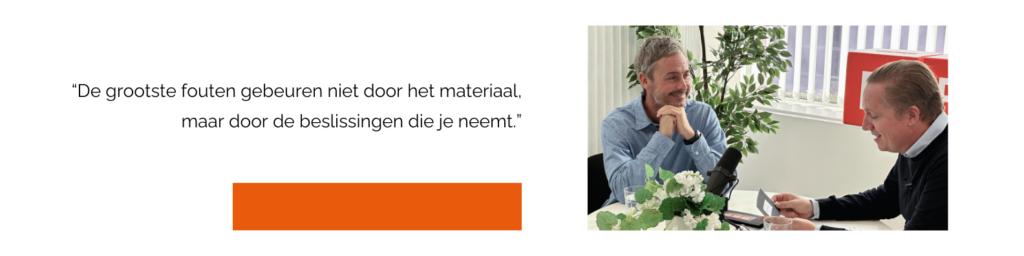
According to Cedric Dumont, taking risks in extreme sports is not a matter of blind daring. On the contrary, a successful jump begins with preparation, training, and a conscious risk assessment.
The greatest danger does not necessarily lie in the unexpected, but in poor decisions and overconfidence. The same logic applies to entrepreneurship. Entrepreneurs must constantly make decisions without having complete certainty. The difference is made by understanding risks and structuring them as much as possible.
Data, experience, and clear processes can help in this regard. Those who prepare well do not need to avoid every risk but can better manage them when the situation becomes tense.
How does flow help to perform better under pressure?
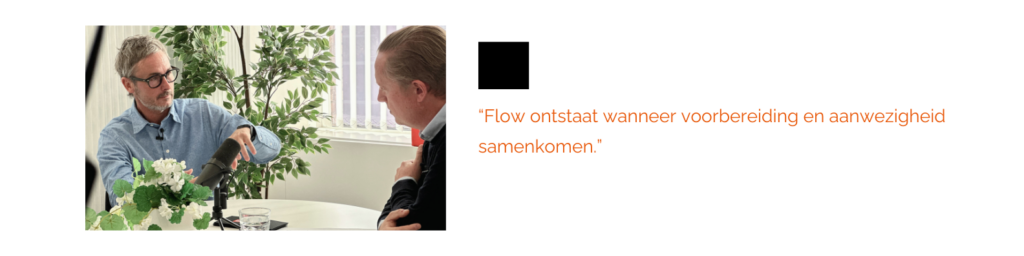
A key concept in the conversation with Cedric Dumont is flow: a mental state where focus, energy, and performance converge.
According to Cedric, flow does not just happen. Preparation and experience play a vital role, as does the context in which one must perform. When distractions and unnecessary noise are limited, more space is created to focus entirely on the task at hand.
For entrepreneurs and leaders, this means that the work environment and way of working can directly influence performance. Clear priorities, less noise, and sufficient responsibility can help teams function better when pressure increases.
Why is stepping outside your comfort zone important for growth?
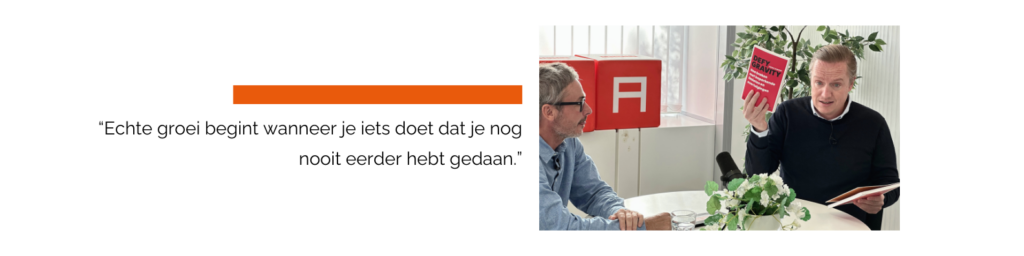
According to Cedric Dumont, comfort is one of the greatest obstacles to personal and professional growth. When everything becomes familiar and easy, many incentives to develop new skills also disappear.
For entrepreneurs, growing therefore means being willing to try new things, make mistakes, and challenge yourself anew. Growth often occurs when you are faced with situations you have not yet fully mastered.
The same principle applies to teams and organizations. A culture where people are allowed to experiment and gain new experiences can contribute to resilience, creativity, and adaptability.
What can entrepreneurs learn from extreme sports?
Cedric Dumont’s experiences show that extreme sports have a surprising amount in common with entrepreneurship.
In both worlds, preparation, risk assessment, focus, and decision-making under pressure are essential. It is not about excluding risk entirely, but about understanding which risks you take, how you prepare for them, and how you react when circumstances change.
This is equally relevant for entrepreneurs and finance professionals. A complex decision requires not only knowledge and data but also the right mindset and the ability to act at the right moment.
How can leaders support high performance?
High performance does not stem from individual motivation alone. Leaders can also create the conditions in which people can perform optimally.
Cedric Dumont’s insights point to the importance of focus, preparation, clear priorities, and responsibility. Too much noise or ambiguity makes it harder to make good decisions under pressure.
For organizations, this means that processes and culture must not only be efficient; they must also help people remain calm and focused when circumstances change.
Why is comfort a risk for entrepreneurs?
Comfort can be pleasant, but it can also cause people and organizations to change less quickly. When something works well, the temptation arises to simply continue as things are today.
Cedric Dumont emphasizes the importance of new challenges and experiences. According to this vision, entrepreneurs who regularly challenge themselves and their organization develop more resilience and remain better prepared for change.
In a world where markets, technology, and expectations are constantly evolving, the ability to reinvent yourself is a vital form of entrepreneurship.
Conclusion: high performance begins with preparation
The conversation with Cedric Dumont demonstrates that lessons from extreme sports are surprisingly relevant to entrepreneurship and leadership.
Taking risks does not mean being reckless. Flow does not happen by chance. And growth often begins where comfort ends.
For entrepreneurs, CFOs, consultants, and team leaders, these are valuable principles: prepare well, understand the risks, limit noise, and dare to challenge yourself and your organization.
Because when it matters most, it is not just about how fast you dare to go, but above all how well you are prepared.
Frequently asked questions about Cedric Dumont and high performance
Cedric Dumont is a pioneer in base jumping and wingsuit flying, entrepreneur, and performance psychologist. In the Never Overdue Podcast, he speaks about risk, high performance, mindset, leadership, and entrepreneurship.
Extreme sports teach that risks should not necessarily be avoided, but that they must be properly assessed and prepared for. Training, experience, and clear decisions play a major role in this.
Flow is a mental state where focus, energy, and performance converge. According to Cedric Dumont, flow arises through preparation, experience, and the right conditions to work with concentration.
Companies can better manage risks by consciously mapping them out, combining data and experience, and creating clear processes and responsibilities.
New challenges and experiences stimulate personal and professional development. For entrepreneurs and teams, leaving the comfort zone can contribute to resilience, creativity, and the ability to handle change.
Leaders can support high performance by setting clear priorities, limiting noise, giving responsibility, and creating an environment where people can stay focused under pressure.


