
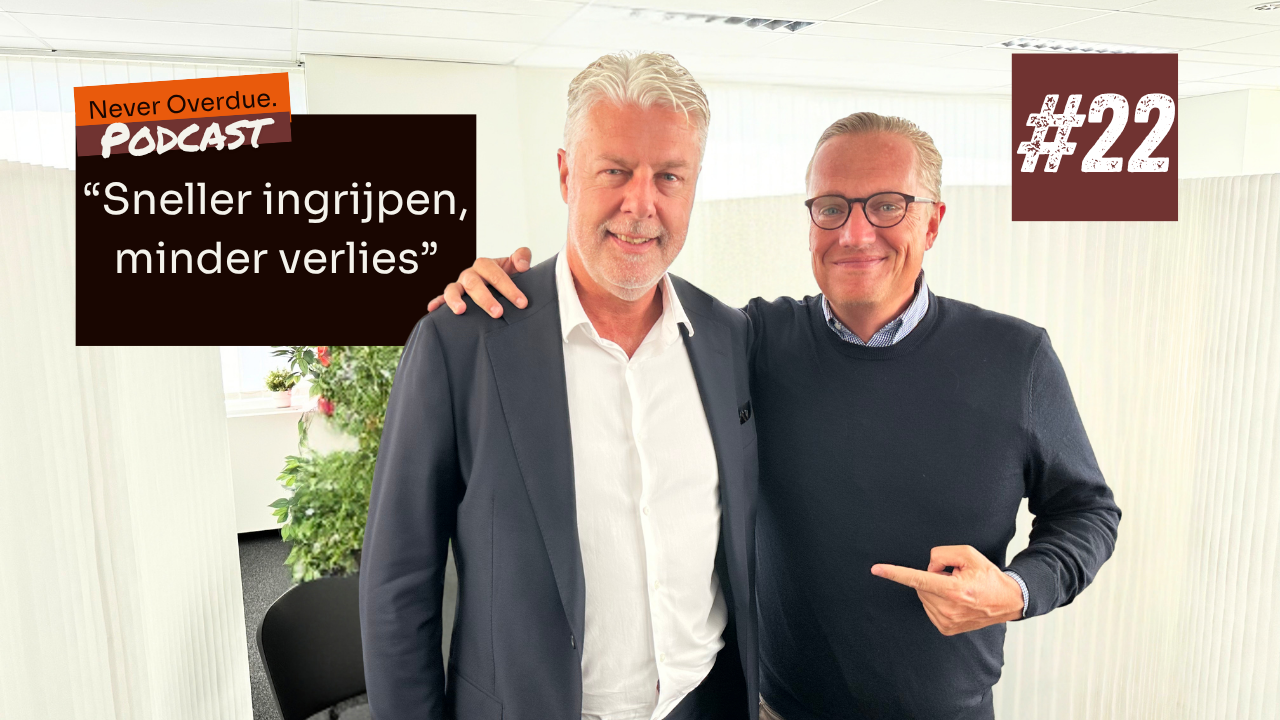
Faster intervention, fewer losses: the indispensable role of the judicial officer
A judicial officer is often associated with seizures, formal notices, and forced collection. But according to Jan Wouters, a judicial officer since 2003 and co-founder of Relias, that is only part of the story.
In the Never Overdue Podcast, Jan speaks with Jean-Paul Van Damme about the human and solution-oriented side of his profession. From debt guidance to complex cases and the seizure of sea vessels: the common thread is always the same. The sooner you know what is really going on, the more opportunities there are to solve a problem.
What does a judicial officer do besides seizing assets?
A judicial officer is much more than someone who seizes assets. Jan Wouters describes how, in his daily practice, he guides both individuals and entrepreneurs when payment problems arise.
The contact between creditor and debtor is central to this. By looking at the specific situation and actively seeking solutions, a debt settlement can sometimes be worked out before the situation escalates further.
Guidance can also be important for people in structural difficulty. Jan refers, among other things, to mandatory facilitator training that helps guide clients toward a debt settlement and limit additional costs as much as possible.
Early contact often makes the difference. The sooner it becomes clear why a debt is not being paid, the more room there is to look for a solution.
Why is acting quickly important for unpaid invoices?
Time is a major factor in payment problems. According to Jan Wouters, the chance of successful collection decreases by 1% per month of delay.
For businesses, waiting can therefore have major consequences. An outstanding invoice that remains for months is not just an administrative problem. It can directly weigh on a company’s cash flow and working capital.
Jan observes that SMEs sometimes wait too long or take other steps first, causing precious time to be lost. By taking action sooner, clarity can be gained earlier regarding a debtor’s financial situation, solvency, potential assets, and the feasibility of a payment plan.
Intervening faster does not necessarily mean acting harsher. It primarily means knowing where you stand sooner.

What can a judicial officer mean for cash flow management?
For entrepreneurs, cash flow is a crucial part of business continuity. Especially when a company is growing, outstanding claims can quickly mount up.
A company can be profitable on paper and yet run into liquidity problems when customers do not pay their invoices on time. Growing working capital can therefore also become a risk.
According to Jan, engaging a judicial officer in such a situation is not a sign that a company has failed. It can actually be a strategic choice to gain insight faster and limit further losses.
The most important lesson is simple: do not wait until a payment problem becomes a cash flow problem.
What situations does a judicial officer encounter in practice?
The profession of a judicial officer is particularly versatile. In the podcast, Jan Wouters talks about cases that go far beyond classic collection.
For example, he participated in the seizure of sea vessels in the Port of Antwerp. In addition, he handles complex formal observations in family and construction matters, among others, and comes into contact with people who end up in structural debt due to personal or financial setbacks.
These diverse cases also show why the profession has a human side. Behind every case is a concrete situation, with different interests and often a lot of emotion.
At the same time, Jan points to an increasing problem: aggression toward judicial officers. That is precisely why communication, empathy, and mediation remain important elements in daily practice, according to him.

Can early intervention help prevent bankruptcy?
Early intervention can ensure that payment problems become visible sooner and that there are more options to look for a solution.
For a company, this means, for example, that it becomes clear sooner whether a customer has temporary payment problems, is structurally insolvent, or still has possibilities to meet their obligations.
Early contact can be equally important for the debtor. When problems become discussable before debts pile up further, solutions can be explored and additional costs can potentially be limited.
The judicial officer can therefore play a role on both sides of the case: not only in the execution of a decision, but also in creating clarity and searching for a workable solution.
What can entrepreneurs learn from a judicial officer?
The most important entrepreneurial lesson from the conversation with Jan Wouters is ultimately not just about legal collection. It is about acting in a timely manner.
When a customer doesn’t pay, it is tempting to wait and see. Maybe the payment will arrive next week. Maybe the problem will solve itself. But the longer a company waits, the fewer options may remain.
Professional cash flow management therefore also means knowing when to intervene, what information you need, and when external expertise can help.
The judicial officer does not have to be the end point of the process. As Jan Wouters shows in this episode, he can actually be an early link in the process toward clarity, recovery, and continuity.

Conclusion: knowing sooner means being able to act faster
The conversation with Jan Wouters sheds a different light on the profession of judicial officer. Behind seizures and collection, there is also an important role as a bridge builder between creditor and debtor.
For entrepreneurs, the timing is particularly relevant. The sooner you gain insight into a payment problem, the sooner you can determine which solution is possible.
Cash flow problems do not disappear on their own. By seeking contact sooner, gathering information, and acting appropriately, companies can try to limit losses and protect their financial continuity.
Frequently asked questions about judicial officers and cash flow
A judicial officer executes court decisions, but can also play a role in formal observations, collection, and guiding cases in which payment problems arise.
According to Jan Wouters, it is important not to wait unnecessarily long. Early contact can provide clarity sooner regarding the debtor’s financial situation and possible solutions.
The longer a payment remains outstanding, the greater the risk that the debtor’s financial situation will deteriorate. As a result, the possibilities for successful collection may also decrease.
Yes. In addition to executing court decisions, judicial officers can also be involved in guidance and searching for solutions, for example, toward a debt settlement.
Outstanding invoices directly affect a company’s liquidity and working capital. Faster insight into payment problems can help entrepreneurs better protect their cash flow.
Not necessarily. The episode with Jan Wouters shows precisely that early contact can also help to gain clarity faster and look for solutions before a situation escalates further.